
#Recherche: Do You Read the Label? | Blog | design mind
Published by Chris Doering,

Do You Read the Label?
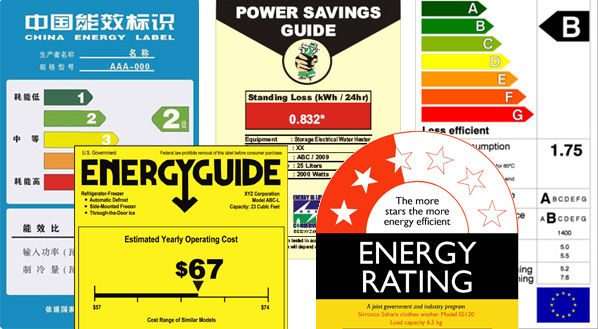
Over 70 countries worldwide have energy label programs. Energy labels provide consumers with valuable information about a product’s energy cost of ownership. Government administration of these programs ensures the consistent format and presentation of energy data on the labels. As more consumers factor energy costs into their purchase decisions, these labels play an increasingly important role in the buying process.
Energy labels must quickly, clearly, and visually communicate consumer benefits. Meaningful, easily compared information and thoughtful graphic design can help–and influence–a consumer to make smarter energy purchases. A quick look at a few countries' solutions shows that some are doing this better than others.
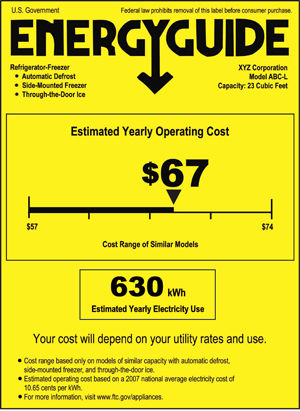
USA EnergyGuide
The EnergyGuide label estimates energy consumption and tells whether that amount is above or below the average for that type of product. As an American (and a designer), I’m sorry to say that this is the poorest designed label of the group. But unlike most others, it uses the estimated annual energy cost, in dollars, as the primary data point rather than kilowatt consumption. It also shows that cost within a relative range of similar products. Not pretty, but easily understood.
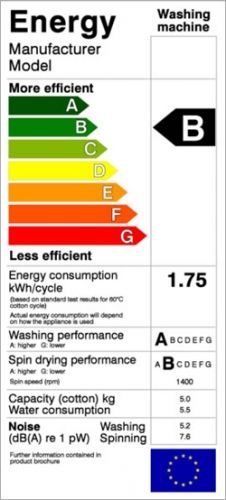
Europe Energy Label
The European Union, EU candidate countries, and a few other European countries have adopted a common labeling scheme. Other countries worldwide, such as South Africa, China and Iran, have adopted labels based on the EU design. The label design is clean and refined; very European. It provides some detail in several different categories, while maintaining its at-a-glance effectiveness.
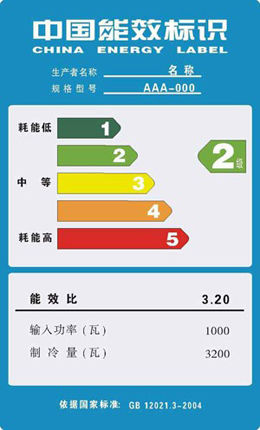
China Energy Label
China’s label program’s stated goal is to save energy, improve energy efficiency, regulate products on the market, create fair market competition, increase consumer awareness, and ultimately develop an energy-saving society. The label is simple, colorful, and visual, with obvious elements from the European design.
Australia
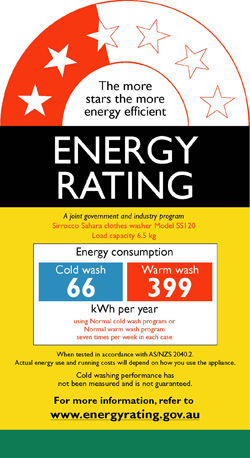
Australia’s label program was started in 1986. The label shows a quick, “star gauge" view of the product’s efficiency, relative to similar products, and clearly displays its estimated annual kilowatt hour consumption. While the bold design is not quite as refined as the European label, it does the job.
India
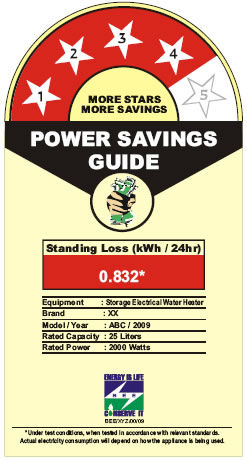
India’s Bureau of Energy Efficiency started its product labeling program in 2006. The Indian label liberally “borrows" from Australia’s design. With India’s exponentially expanding consumer class buying electronics in staggering numbers, the country is struggling to keep its electric infrastructure fit for the demand. If their energy labels can inform and influence consumers to buy greener products, it can make a real difference.
Energized is an ongoing series following my education about living a more sustainable life.

As Vice President of frog’s Design Realization group, Collin works closely with our design and engineering teams to bring innovative ideas to market. With over 20 years of experience in both creative and engineering management, Collin brings focus and multi-disciplinary expertise to this critical phase of the delivery process. In 1996, Collin co-founded frog’s digital media group and has worked extensively with frog clientele in the USA, Europe, and India.
Recent Comments
-
 Sheri
Sheri After the removal of a tumor in my brain I lost the hearing in my left ear. I am happy to say that is the only side affect I had. I am 55 and all of a sudden I can't respond to things the same way...
-
 Lisa B. Woods
 Thanks for sharing! As a designer I'm curious about your research process, and as the only child of an aging parent I'm especially invested in hearing about your findings.
Aging in Place (2): Building a Foundation for Design · 1 day ago
-
 Gary Nichols
 Interesting article. Yes there may be too many apps, and with the ketchup bottle some of them are not essential per say - but I would argue that apps provide something that you are unable to get...
- Flavster
This would really make life a whole lot better to a lot of disabled people
- Vageesh jajur
Thank you very much this is the thing am looking for.. in future really i want to be a desing engineer.. how abt doing masters in desing
From Engineer to Design Engineer: 8 Steps to Transform Your Career · 1 week ago
Categories on Energized
- CleanTX Forum (1)
- LED lighting (2)
- Microsoft Hohm (1)
- Powercost monitor (1)
- TED 5000 (3)
- air conditioning (1)
- belkin conserve smart energy (1)
- compact fluorescent CFL smart energy (1)
- consumer behavior (1)
- electricity smart energy (1)
- energy (1)
- energy label (1)
- google powermeter (2)
- home energy monitors (1)
- microstaq (1)
- pecan street project (1)
- power meters energy (1)
- smart energy (4)
- smart energy green (1)
- smart grid (3)
- solar energy (2)
- tax credits (1)
- whole house monitoring (1)

http://designmind.frogdesign.com/blog/do-you-read-the-label.html